
Boats and gelcoat
Sun and salt turn gelcoat chalky, then porous, then stained. Nearly all of it can be brought back, as long as it isn't worn through, and it stays glossy only if it's protected.
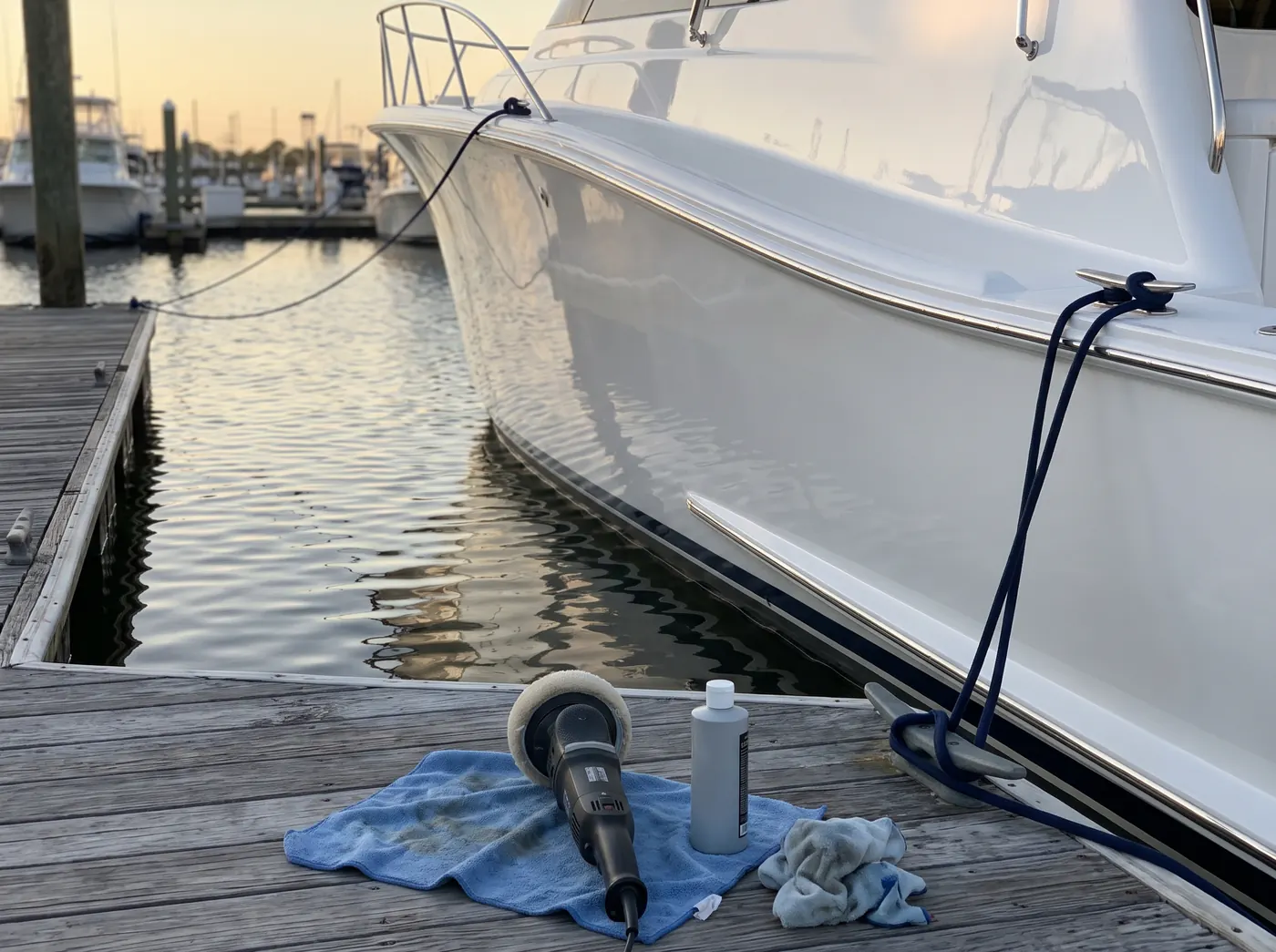
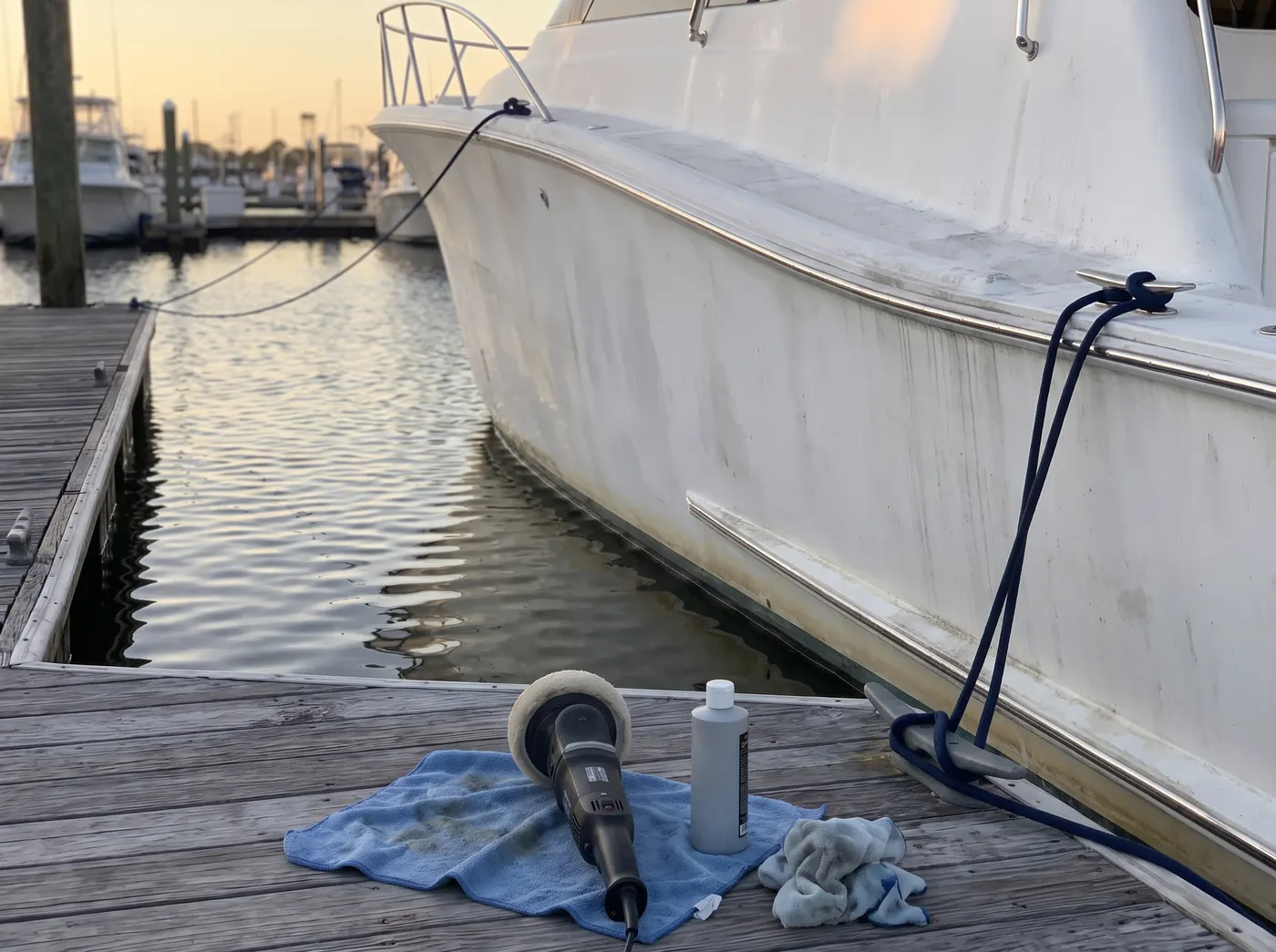 ↔BeforeAfter
How we restore gelcoat
Wash
Marine boat soap, not household detergent, to lift surface dirt and salt. Then we look for stress cracks around fittings before going further.
Remove stains
Rust, black streaks, exhaust and organic stains sit inside porous gelcoat where soap can't reach. They come out chemically, with gel removers that keep off paint, varnish and metal.
Compound and polish
Chalky oxidation is cut back with a rubbing compound, then refined with finer polish until the gloss returns. Every pass removes some gelcoat, so we use the least aggressive product that works, with a dual-action machine that's far less likely to burn through than a rotary.
Wax or seal
Wax seals out oxygen and carries UV inhibitors. It only goes on clean, polished gelcoat: wax over oxidation just seals the damage in.
Process after West Marine, West Advisor "Gelcoat Care and Restoration Guide".
Keeping it that way
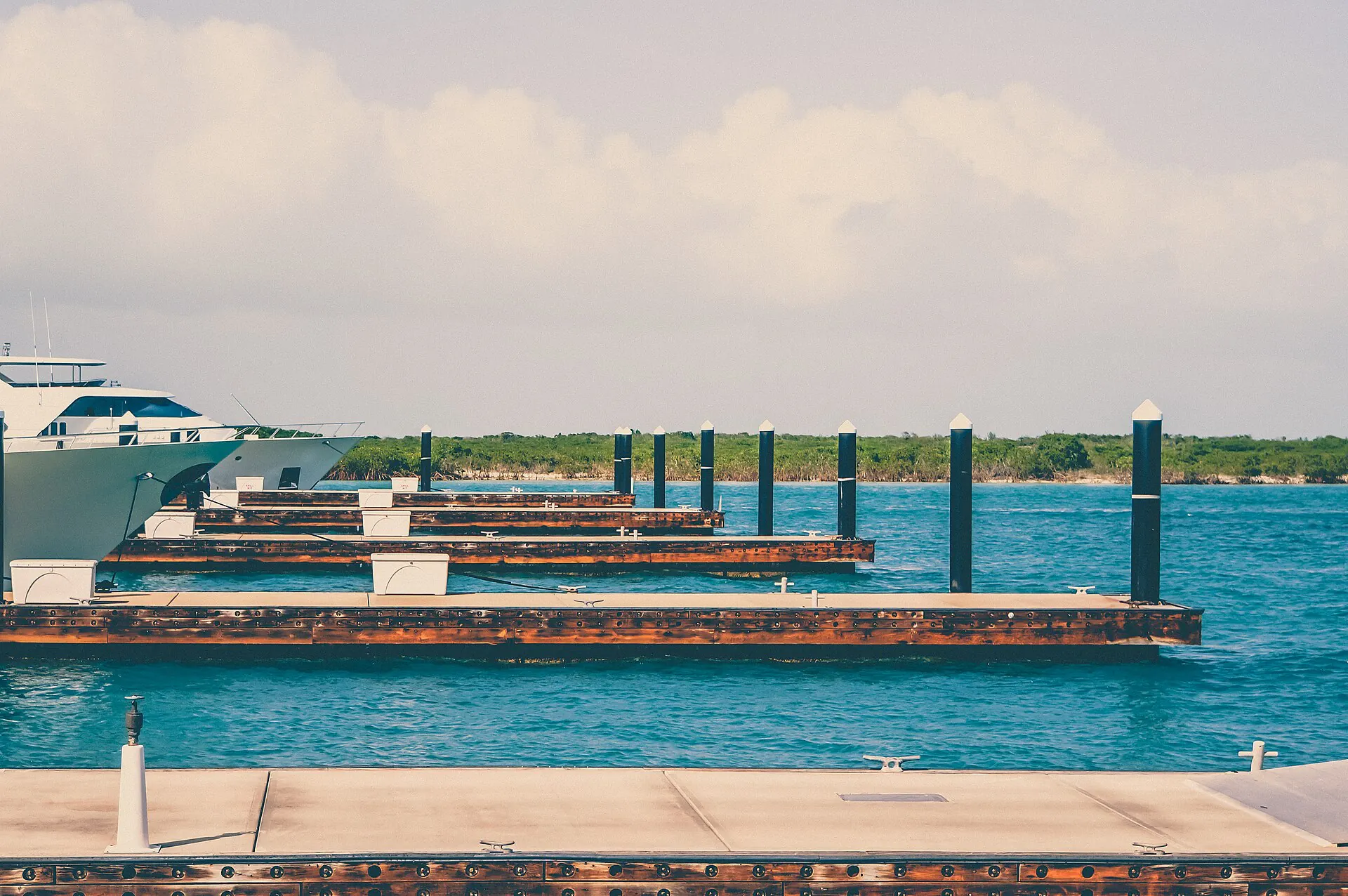
In year-round South Florida sun, wax wears faster than the usual once-a-season advice assumes. West Marine suggests boats kept in strong sun all year may need waxing about twice a year.
The simple test: when water stops beading and starts sheeting off the hull, the protection is gone. Polymer waxes and sealants last longer than pure carnauba, which gives a warmer shine but needs reapplying more often.
Boat questions
Why is my boat's gelcoat chalky?
That's oxidation. Unprotected gelcoat breaks down in sun and salt air, turns dull, then chalky, then porous, and porous gelcoat stains easily.
Can oxidized gelcoat be restored?
Nearly always, unless it's worn through to the fibreglass. Compounding and polishing remove the damaged surface; wax or a sealant then protects what's underneath.
Can non-skid be polished?
Non-skid in good condition can be cleaned, polished and protected without losing grip; worn non-skid is usually just cleaned and stain-treated.
Do you work on boats in the water?
Tell us where the boat is kept when you send a request, and we'll tell you what's possible at that marina or yard.